
Wall Street Teeters as Tech Turbulence and Trade Tensions Clash With Inflation Fears
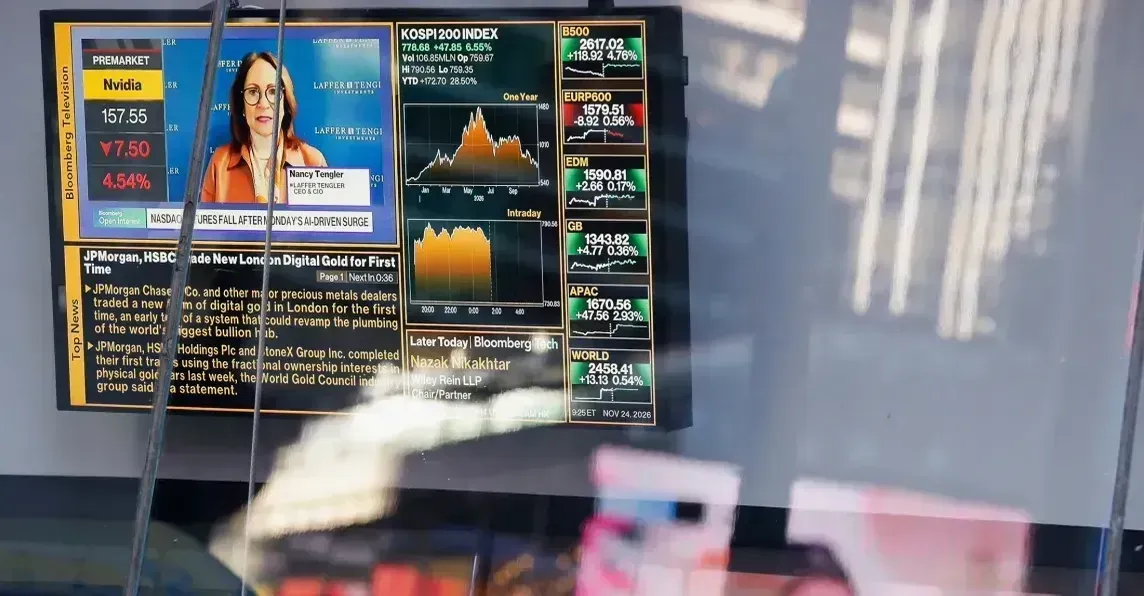
Wall Street experienced a rollercoaster session on Wednesday, beginning with a sharp plunge that nearly pushed the Nasdaq 100 into bear market territory. Early trading saw the S&P 500 slide by more than 3 percent as investors grew jittery over the sustainability of the artificial intelligence boom. While spirits lifted slightly toward the end of the day, allowing indices to recover some ground, the underlying anxiety remains palpable. Some bright spots emerged late in the session, such as AI newcomer Anthropic finally clawing its way back above its initial public offering price after several days of heavy losses.
Despite the modest recovery, chip giant Nvidia continued to struggle, sliding for a second consecutive day. This comes after a chaotic sequence involving CEO Jensen Huang, who was reinstated following direct intervention from President Donald Trump. Although Huang’s return initially triggered a massive rally on Monday, analysts suggest that early enthusiasm has faded into a risk-off mood. The volatility is compounded by a wider slump in semiconductors and data center stocks, many of which have seen staggering declines since their peaks last summer.
Adding to the turmoil is a fresh wave of economic headwinds driven by government policy and rising costs. The Trump administration announced new tariffs targeting major trading partners including China and the European Union, sparking fears of renewed trade wars and increased protectionism. These geopolitical frictions coincide with troubling new inflation data showing that consumer prices are moving further away from the Federal Reserve’s target goals, suggesting that higher energy costs may be leaking into the broader economy.
This inflationary trend has put policymakers on edge and left investors fearing more aggressive action from the central bank. Fed Governor Christopher Waller recently signaled that a larger than usual interest rate hike might be necessary to shock inflation back under control ahead of December’s meeting. Between the threat of tighter monetary policy and an upcoming holiday weekend where traders typically reduce risky positions, markets remain fragile as they navigate a complex intersection of technological doubt and macroeconomic instability.
Related Stories
The Cost of Executive Immunity at Nvidia
Jensen Huang returned to the helm of Nvidia with a confession that few CEOs ever voice…
American Optimism Surges Following Midterm Election Results
Americans woke up feeling significantly more hopeful about their financial futures this November, according to new…